Sizing an RV pad in Brooksville around the rig you own
Start with the tape measure, not the yard. Measure the rig bumper to hitch, add room to walk around it, and add width if slide-outs or an awning open on the pad. A 12 by 40 slab leaves a walk-around strip beside a mid-30-foot travel trailer or motorhome. A longer fifth-wheel, or a boat trailer parked nose to tail with a utility trailer, pushes toward 12 by 50 or a 14 or 16 foot width.
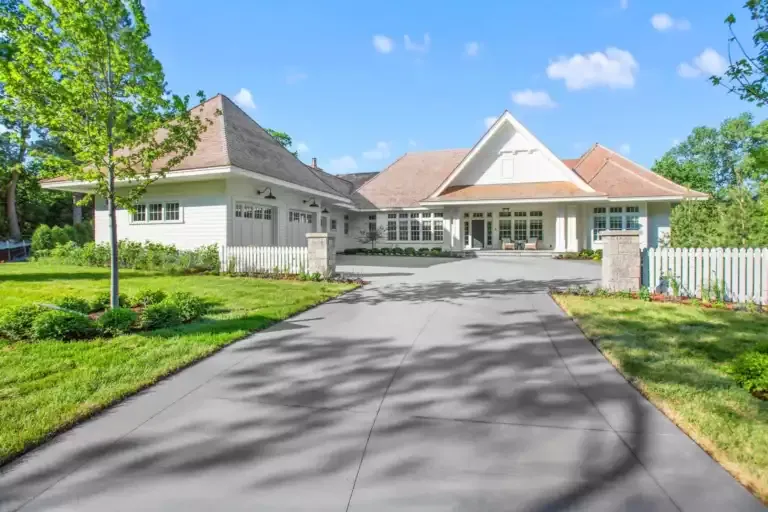
Next, think about how the rig gets in. A pad that runs straight off the driveway is the easiest to back into. Beside the house, the pad needs room for the trailer's swing, so we can flare the entry or widen the first 10 feet. A pad out back on acreage might need a short concrete approach so the wheels never drop off the edge into soft sand.
Send us the rig's length and width, whether you plan a carport or a cover, and a photo of the route from the road. With that, we can sketch your RV pad in Brooksville before we visit.
Thickness, steel and thickened edges under a heavy coach
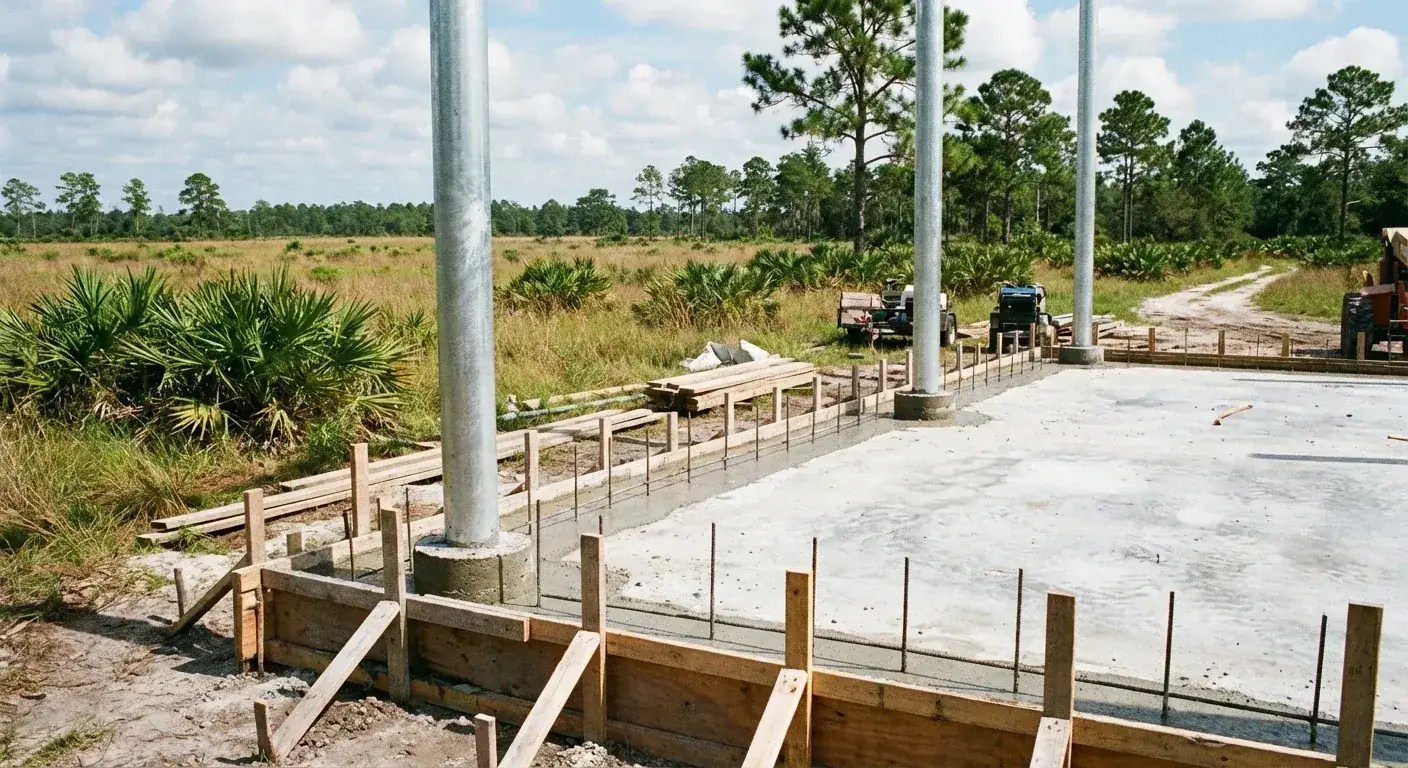
Concrete Network gives 4 inches as the minimum for residential driveway slabs, and that suits a light travel trailer or a boat. A heavier rig earns the extra inch. The same source puts it simply: going from 4 to 5 inches adds roughly 20% to the concrete cost but raises load-carrying capacity by nearly 50%. On a long RV pad in Brooksville that sees a loaded motorhome sit on the same spot for months, we lean to 5 or 6 inches.
Steel follows thickness. Welded wire mesh fits 4 to 5 inch slabs, and rebar on about a 12 inch grid goes in slabs 5 inches and thicker. Synthetic fibers help with shrinkage cracking, but they don't replace steel. Thickened edges, 1 to 2 inches deeper for the first 4 to 8 inches in from the edge, keep the sides from snapping where tires roll on and off.
Control joints go no more than about 10 feet apart on a 4 inch slab, cut a quarter of the slab depth. On a 12 by 40 pad that means at least three cross joints, plus one down the middle, since 12 feet is wider than that 10 foot limit. Isolation joints split the pad off from the driveway, the house slab and any existing concrete, so each piece moves on its own.
Concrete RV pad, boat storage pad and carport slab pricing for Brooksville and the surrounding counties.
| Job | Per sq ft | Typical project | What moves the price |
|---|---|---|---|
| RV, boat & carport pads | $8 to $14 | $3,840 to $6,720 (12x40 RV pad, 480 sq ft, 4 to 6 in. reinforced) | Thickness, rebar vs mesh, carport footings, fill, gravel removal, truck access |
Ranges, not quotes. Your price comes in a free written estimate after we see the site, with permit fees listed separately and no hidden fees.
Boat storage pads and trailer parking out back
A boat on a trailer is lighter than a motorhome, but it puts its weight on two tires and a tongue jack, and it can sit in the same spot all summer. The jack is the weak point on grass and sand: it sinks, the trailer tips, and the bunks press unevenly on the hull. Even a narrow concrete boat storage pad fixes that.
Put a boat pad along a side yard or behind a fence gate and a few site questions come up: is the gate wide enough for the trailer and for a concrete chute or a wheelbarrow line, are there irrigation lines or a septic field in the path, and does the slab need to tie into a walkway to the house. Before we dig anywhere, Florida law requires a Sunshine 811 locate request at least two full business days ahead.
Hernando's county exemption list carves out non-structural patio-style slabs under 500 square feet. A parking pad isn't a patio. Call the Building Division with your slab size before you assume you can skip the permit. Our Hernando, Citrus and Sumter permit guide explains how to ask.