Concrete contractors in Brooksville: City Hall or Providence Boulevard?
A Brooksville mailing address doesn't settle who permits the work. Around town, one street can be city jurisdiction while the next one over is county. The City of Brooksville tells owners to look the parcel up on the Hernando County Property Appraiser site and read the Levy Code. CWBE means the City of Brooksville Building Division, on the first floor of City Hall on Howell Avenue. CWES means the Hernando County Building Division on Providence Boulevard.
Good concrete contractors in Brooksville look this up before the site visit, since the answer changes the forms and fees, and how long you wait. If you're on the county side, our service areas page points to the nearby county towns such as South Brooksville and Brookridge, where the county rules apply.
How a city permit runs, from portal to window card
Inside city limits, you apply for permits and request inspections through the city's online Permits Portal. The city says a residential plan review takes about 10 working days for the first pass, so that wait sits in our schedule between your signed quote and the pour date. Paper submittals that staff have to process carry a $54 flat fee plus per-page charges, which is one reason we file online. Once the permit is issued, the city emails the permit card, and it has to be posted in a window at the property where the inspector can see it.
Order matters to the city. Quoting the Florida Building Code (section 109.4), it charges a penalty of 100% of the usual permit fee, on top of the fee itself, when work starts before the permit is issued. A city single-family permit now expires 1 year after it's issued. The city also publishes the state's under-$7,500 exemption for single-family work, by written request with the contract, except in a flood hazard area or for structural work; our permit guide covers how that applies to flatwork. A Notice of Commencement is still recorded for contracts over $2,500.
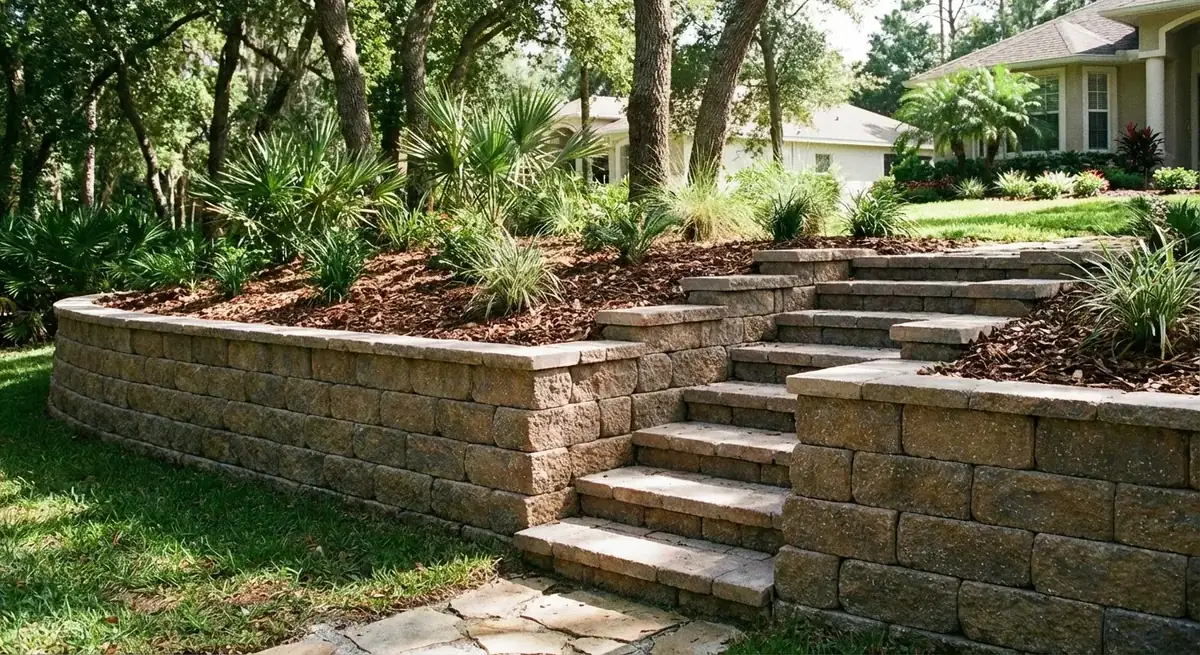
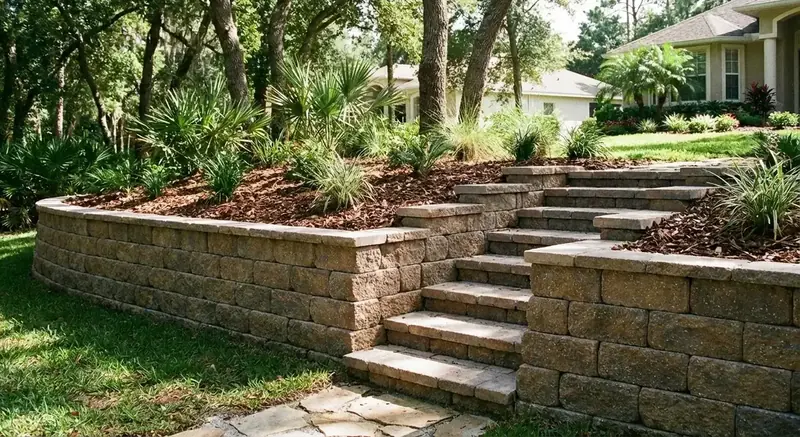
Compare concrete contractors in Brooksville on one point: the review wait sits ahead of the pour date, so ask how it appears in the schedule. If a retaining wall or a paver patio is planned next to the new slab, the same Levy Code check decides its office too. On the county side, Hernando lists a $180 flat fee for a residential retaining wall; structural walls need permits, while ornamental walls under 48 inches and sand-set pavers are exempt. Tell us what else is planned around the pour, and we will name the office for the concrete, whether the lot is in town or out in South Brooksville or North Brooksville.
Our typical ranges for work inside and around the city. City or county permit fees go on the quote as their own line.
| Job | Per sq ft | Typical project | What moves the price |
|---|---|---|---|
| Concrete driveways | $8 to $14 | $4,000 to $9,800 | Typical 2-car, 4 in. broom finish; tear-out of an old driveway and apron work |
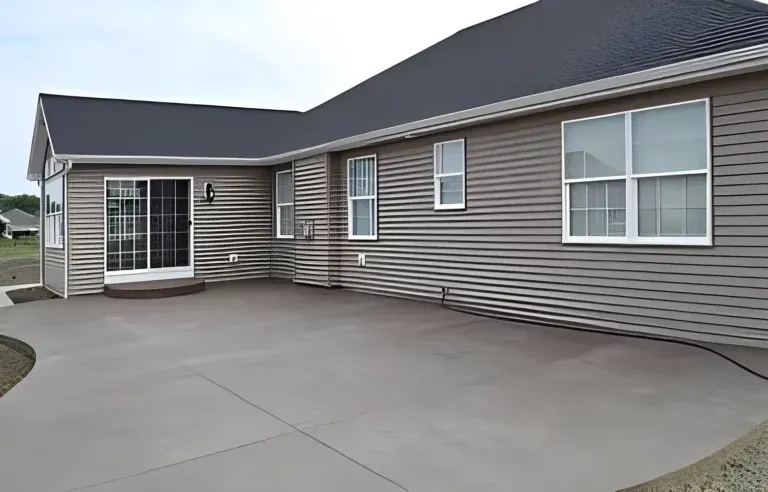
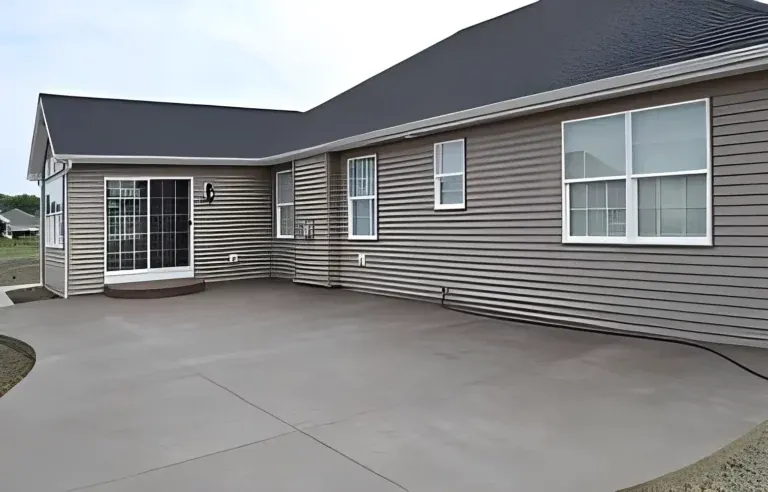
| Concrete patios | $7 to $12 | $1,680 to $4,800 | About 240 to 400 sq ft plain or broom; fill on low, wet lots |
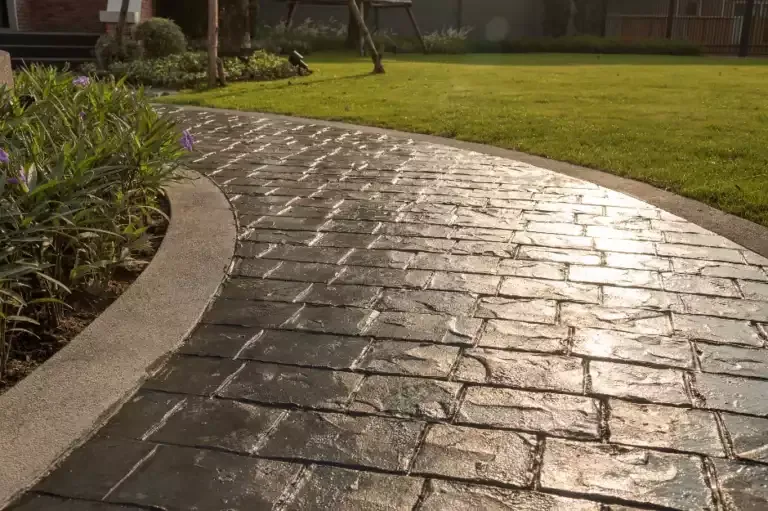
| Stamped and decorative | $12 to $22 | $3,600 to $14,300 | Pattern, color and sealer; patio to driveway size |
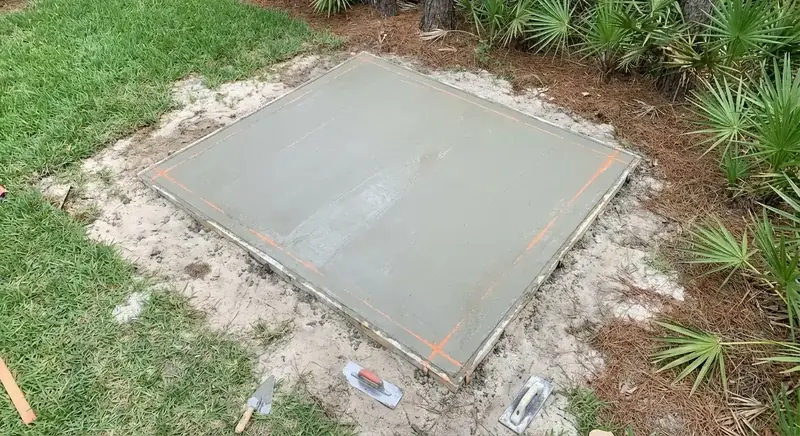
| Slabs and foundations | $7 to $12 | $1,400 to $7,200 | Shed to 2-car garage size, 4 in. reinforced; base course and thickened edges |
| Pole barn slabs | $7 to $12 | $8,400 to $14,400 | 30x40, 4 to 6 in. reinforced; county parcels outside town |
| RV, boat and carport pads | $8 to $14 | $3,840 to $6,720 | 12x40 RV pad; a carport pad beside a manufactured home can be smaller |
On a city lot, a 10 by 30 carport pad is 300 sq ft, so $2,400 to $4,200 at $8 to $14 per sq ft. Ranges are typical, not a bid: the number for your lot comes in a free written estimate after we see the site.
Micanopy and Blichton loams under the old county seat
Deep, dry Candler sand covers the ridge towns around us, such as Brookridge and Spring Hill. The city of Brooksville is different. In a USDA soil sample of 30 points inside the city boundary, the common series were Micanopy loamy fine sand (somewhat poorly drained), Blichton loamy fine sand (8 of 30 points, poorly drained, with a water table as shallow as about 15 cm), Nobleton fine sand and Flemington fine sandy loam. NRCS rates 29 of those 30 points as somewhat or very limited for building homes without basements.
For concrete contractors in Brooksville, that makes water the enemy, not loose sand. On loamy ground that holds water we strip the organic layer, bring in clean fill where the grade needs it, compact in lifts and set the finished surface so it sheds water away from the house. For a slab below grade, the code calls for a 4 inch base course of clean graded sand, gravel or crushed stone unless the slab sits on well-drained or sand-gravel Group I soil, and these series aren't rated well-drained. We also plan joints and thickened edges for a base that can soften in a summer of rain. The slabs and foundations page goes deeper on the spec.